The Difference Between Acute Stress and Chronic Anxiety and Where CBD Fits
Acute stress is a short-term response that helps the body react and recover. Chronic anxiety is a sustained internal state that does not switch off when the trigger passes. The two feel similar in the body but operate on different timelines, and they respond to very different tools. CBD has become a well-studied option for both, as it interacts with the endocannabinoid system, a network that regulates mood, sleep, and the body's response to threats. This guide explains the biology of stress and anxiety, what current research says about CBD for anxiety, how to choose the right format and dose, and when symptoms call for clinical care rather than self-management.
Defining the Difference: Acute Stress vs. Chronic Anxiety
Acute Stress
A near miss in traffic or a sudden deadline can all set it off. Heart rate climbs, breathing quickens, and attention narrows. The defining feature is that once the trigger passes and the body has a chance to settle, the response winds down within minutes to hours. This is the stress response that CBD for acute stress aims to soften without dulling alertness.

Chronic or Generalized Anxiety
Chronic anxiety is a sustained activation of the nervous system that lasts long after a trigger ends, or that shows up without any specific trigger at all. Generalized anxiety disorder, the most common subtype, is characterized by excessive worry on most days for at least six months. Symptoms include restlessness, muscle tension, sleep disruption, and difficulty concentrating.
Many people reach for a single high dose of CBD oil for anxiety during a panicky moment, then assume it has failed when the calm does not last. The issue is the mismatch between an acute tool and a chronic condition that needs daily, sustained support. The opposite mistake is also common, where someone takes daily preventive doses for a one-time stressful event that would have resolved on its own.
The Biology of the Stress Response
The HPA Axis and Cortisol Cascade
The hypothalamic-pituitary-adrenal axis, often shortened to HPA axis, is the master conductor of the stress response. A perceived threat triggers the hypothalamus, which signals the pituitary, which signals the adrenal glands to release cortisol. Cortisol mobilizes energy, sharpens focus, and dampens functions that are not urgent in the moment. After the threat clears, the system is supposed to wind back down through a feedback loop. In chronic anxiety, the feedback loop weakens, and cortisol stays elevated longer than it should.
Fight-or-Flight and Why It Exists
The sympathetic nervous system is the second arm of the stress response. It releases adrenaline and noradrenaline within seconds of a trigger, raising heart rate and redirecting blood flow toward muscles that might need to act. This system was designed for short bursts. The body returns to its parasympathetic, rest-and-digest state once the threat is gone. Modern stressors rarely involve physical danger, and the system fires for emails, traffic, and arguments with the same intensity.
When the Stress Response Stops Turning Off
In chronic anxiety, the off-switch wears down. Cortisol remains elevated, the parasympathetic system struggles to take over, and the body operates from a low-grade fight-or-flight baseline. Over time, this drives sleep loss and a heightened sensitivity to small triggers. Restoring the off-switch is where products like a CBD tincture for anxiety can become part of a broader regulation plan.
How CBD Interacts With the Stress and Anxiety Pathways
The endocannabinoid system maintains balance across mood, sleep, pain, and immune function. Endocannabinoids, such as anandamide, are released in response to stress and help restore the system to baseline. CBD slows the enzyme that breaks anandamide down, which keeps this natural calming molecule active longer. This buffering effect is one of the most cited mechanisms behind full-spectrum CBD for anxiety support.
CBD activates the 5-HT1A serotonin receptor, the same receptor targeted by certain anti-anxiety medications. Activation of this receptor is associated with reduced anxiety, improved mood, and a softer stress response. The mechanism helps explain why some users describe a quieter mind within 30 to 60 minutes of taking a moderate dose, even without sedation. GABA is the brain's primary inhibitory neurotransmitter, acting as a brake on overactive neurons. CBD appears to enhance GABA signaling, which contributes to the settling effect that many people describe. This is a different mechanism from benzodiazepines, which bind directly to GABA receptors and can cause dependence. CBD's gentler influence is one reason it has become popular for generalized anxiety routines that need to be sustainable over months or years.
A 2019 case series in The Permanente Journal followed 72 adults with anxiety or sleep complaints and reported reduced anxiety scores in 79.2 percent of patients within the first month, with effects sustaining over time. Research is still catching up to consumer use, and the evidence base is broad enough to support measured experimentation.
Choosing the Right CBD Format for Stress vs Anxiety
Tinctures
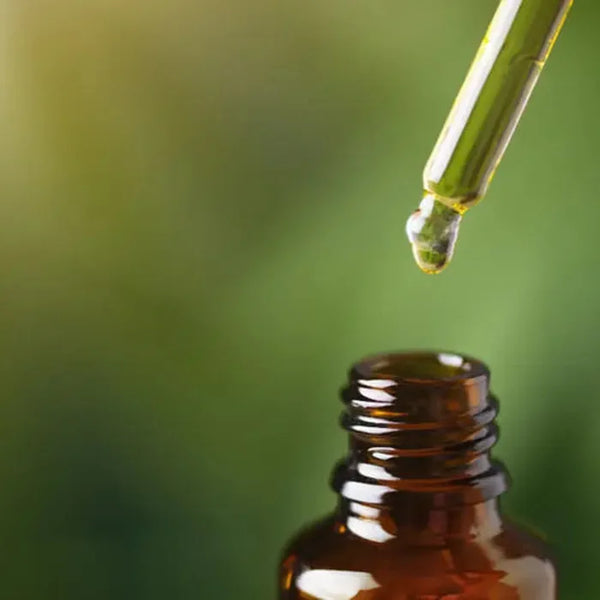
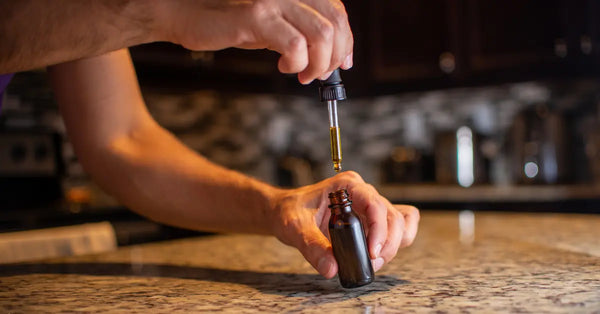
Tinctures are absorbed sublingually within 15 to 30 minutes, making them a good option for acute episodes. A few drops under the tongue before a tense meeting, a difficult conversation, or a public speaking moment can soften the edge without compromising the body's natural alertness. This faster onset is why a CBD tincture for anxiety is often the recommended starting format for situational stress users.
Gummies and Edibles for Steady Daily Coverage
CBD gummies for anxiety takes 45 to 90 minutes to land but provides a steadier curve over six to eight hours. This profile fits chronic anxiety better than acute stress because the goal is daily baseline regulation rather than rapid relief.

Full Spectrum vs Broad Spectrum vs Isolate
Full-spectrum CBD for anxiety contains the complete plant profile, including up to 0.3 percent THC, terpenes, and minor cannabinoids. The combination produces the entourage effect, which many users find more anxiolytic than the isolate alone. Broad spectrum keeps the supporting compounds and removes detectable THC, which is the right choice for users with workplace drug testing. Isolate is the cleanest option for those who want CBD alone.
Dosing CBD for Acute Stress and Chronic Anxiety
Dosing is where most users either find their groove or quietly write the protocol off. For acute stress events, a moderate single dose of 15 to 30 milligrams of CBD taken 30 to 45 minutes before the trigger works well. For chronic anxiety, a smaller daily dose of 10 to 20 milligrams taken consistently is more effective than larger occasional doses. This is the foundation of any reasonable CBD dosage for anxiety plan, and it should be adjusted based on body weight and prior response to similar compounds.
Timing for Acute Stress Episodes
Tincture timing matters more than gummy timing for acute use. The faster onset of a sublingual format means you can dose 30 to 45 minutes before a known stressor. Here is a practical approach for using CBD during an acute stress episode:
- Pause and Take a Slow Inhale. Before reaching for any product, take a single 30-second pause, breathing in through the nose for 4 seconds and out through the mouth for 6 seconds. This activates the parasympathetic nervous system and creates the foundation that CBD can build on, rather than replace, as your first line of defense.
- Dose a Tincture Sublingually. Place 15 to 20 milligrams of a fast-acting CBD tincture under the tongue and hold it there for at least 60 seconds before swallowing. This routes the dose directly through the sublingual tissue into the bloodstream, delivering a 15- to 30-minute onset that fits the timing of an acute stress event.
- Move Your Body Briefly. While the dose absorbs, walk for two to five minutes, stretch your shoulders, or do a few slow squats. Movement burns through circulating cortisol and adrenaline that the stress response just released, which compounds the calming effect of CBD and meaningfully shortens the overall recovery window.
- Reassess Before Redosing. Wait at least 30 minutes after the initial dose before considering more. CBD often produces a subtle settling rather than a dramatic shift, and many users mistake a working dose for a failed one. If the situation is still escalating, add 5 to 10 milligrams rather than doubling up the original amount.
For chronic anxiety, consistency outperforms intensity. A 10- to 20-milligram daily dose, taken at the same time for at least three weeks, gives the endocannabinoid system a fair window to recalibrate. Most users do not feel a dramatic shift in the first few days. They feel a quiet improvement in baseline tension by week three.
When CBD Isn't Enough: Recognizing the Limits
Severe Panic, Trauma, and Clinical Anxiety
Panic disorder and severe generalized anxiety often need professional treatment that includes therapy, medication, or both. CBD for panic attacks can soften the edges of milder episodes for some users, and it is not a reliable solo treatment for full panic disorder. The most useful role for CBD in severe cases is often as a complement to evidence-based care, such as cognitive behavioral therapy, with clear guidance from a clinician.
CBD can affect the CYP450 enzyme system that metabolizes many common medications. This includes certain antidepressants, anti-anxiety medications, blood thinners, and statins. Bringing a current medication list to your prescriber before adding CBD is the safest path forward, especially when starting at higher doses.

When Therapy and Medical Care Become Essential
Some signs indicate that anxiety has moved beyond what supplements can address. Recognizing them early changes the treatment trajectory. The following signs suggest a clinical evaluation should come before adjusting any supplement plan:
- Persistent Worry That Disrupts Daily Function. When anxiety affects work performance, relationships, or basic self-care for more than a few weeks, the underlying pattern likely needs more than a daily supplement. A licensed therapist or primary care physician can assess whether generalized anxiety disorder or another condition is driving the symptoms.
- Frequent Panic Attacks. Repeated panic episodes involving chest pain, shortness of breath, or fear of losing control point toward panic disorder.
- Trauma-Linked Flashbacks or Avoidance Patterns. When anxiety is tied to specific past events, intrusive memories, or active avoidance of reminders, the underlying issue may be post-traumatic stress. PTSD treatment is highly specialized and requires a clinician trained in trauma-focused therapies, which CBD alone cannot replace under any circumstances.
- Suicidal Thoughts or Severe Hopelessness. Any thoughts of self-harm or persistent hopelessness deserve immediate clinical attention without delay. Crisis lines are available around the clock and offer free, confidential support, and primary care providers can offer same-day referrals when needed. This level of distress is not a CBD issue, and waiting often makes the situation worse rather than better.
The line between productive self-management and clinical territory is not always obvious. When in doubt, a single visit with a primary care provider or licensed therapist is the most efficient way to clarify it and decide what role, if any, best CBD for anxiety strategies should play within a larger treatment plan. Many people find the most effective approach is layered, with CBD supporting daily regulation and clinical tools handling the deeper work. Pair a quality, lab-tested product with steady dosing, smart timing, and honest self-assessment, and you give yourself the best chance of meaningful change without overpromising what any single tool can deliver.
Sources
- Bergamaschi, M. M., Queiroz, R. H., Chagas, M. H., de Oliveira, D. C., De Martinis, B. S., Kapczinski, F., Quevedo, J., Roesler, R., Schröder, N., Nardi, A. E., Martín-Santos, R., Hallak, J. E., Zuardi, A. W., & Crippa, J. A. (2011). Cannabidiol reduces the anxiety induced by simulated public speaking in treatment-naïve social phobia patients. Neuropsychopharmacology, 36(6), 1219-1226. Doidoi.org/10.1038/npp.2011.6
- Blessing, E. M., Steenkamp, M. M., Manzanares, J., & Marmar, C. R. (2015). Cannabidiol as a potential treatment for anxiety disorders. Neurotherapeutics, 12(4), 825-836. Doidoi.org/10.1007/s13311-015-0387-1
- Harvard Health Publishing. (2021). Cannabidiol (CBD): What we know and what we don't. Harvard Medical School. HarvardCannabidiol (CBD): What we know and what we don't - Harvard Health
- McEwen, B. S. (2017). Neurobiological and systemic effects of chronic stress. Chronic Stress, 1, 1-11. Doidoi.org/10.1177/2470547017692328
- National Institute of Mental Health. (2023). Anxiety disorders. U.S. Department of Health and Human Services. NihAnxiety Disorders
- Shannon, S., Lewis, N., Lee, H., & Hughes, S. (2019). Cannabidiol in anxiety and sleep: A large case series. The Permanente Journal, 23, 18-041. Doidoi.org/10.7812/TPP/18-041
- Skelley, J. W., Deas, C. M., Curren, Z., & Ennis, J. (2020). Use of cannabidiol in anxiety and anxiety-related disorders. Journal of the American Pharmacists Association, 60(1), 253-261. Doidoi.org/10.1016/j.japh.2019.11.008